The lifespan of a tennis ball is a recurring question for players, whether they are amateurs or professionals. Tennis balls are not eternal, and their wear and tear directly affect performance on the court. But how long does a tennis ball remain in good condition? Let's break down the factors that influence a ball's durability and how to know when it's time to replace it.

Facteurs influençant la durée de vie d'une balle de tennis

Factors influencing the lifespan of a tennis ball

Usage

One of the most obvious factors that determines the lifespan of a tennis ball is the frequency and intensity of use. When a ball is used in an intense match or a prolonged training session, it wears out much more quickly.

  • Competitive matches: In official competitions, balls are generally changed every 7 to 9 games, due to the rapid wear from powerful shots and intensive movement.
  • Regular training: In practice, a ball can last for several hours, but it will gradually lose its liveliness and bounce over the course of rallies.

The playing surface

The surface on which you play also has a significant impact on the lifespan of the balls. Hard courts are particularly abrasive for the balls, while clay or grass courts cause less wear.

  • Hard courts: Hard surfaces like concrete or synthetic materials quickly wear out the felt of the ball, thus reducing its lifespan.
  • Clay and grass: These surfaces are softer, which allows the balls to last longer before showing signs of wear.

Signs that a tennis ball is worn out

Loss of pressure

Tennis balls are pressurized, and this pressure naturally decreases over time. After several hours of play, the ball loses its ability to bounce correctly and becomes harder to control. A ball that no longer bounces like it did at the beginning is a clear sign that it needs to be replaced.

Felt wear

The felt that covers the ball plays an essential role in its behavior in flight and on the bounce. When this felt begins to degrade and fray, the ball loses precision and speed. A ball with worn felt also tends to offer less control during shots.

Signes indiquant qu'une balle de tennis est usée
Durée de vie moyenne d'une balle de tennis

Average lifespan of a tennis ball

For recreational play

For a recreational player who plays occasionally, a tennis ball can last between 6 and 9 hours of active play. However, even after this time, it can be reused, but it will have a less consistent bounce and be much slower.

For competitive players

This varies depending on the level of play, but the ball will have an acceptable lifespan of between 1 and 3 hours of active play. After this time, the ball's felt and bounce will be of lower quality. The bounce will be lower and the ball slower, while also losing a certain level of control.

For professionals

In professional tournaments, balls are changed very frequently, usually after 7 to 9 games, which is about 30 to 60 minutes of play, due to the intensity of the rallies. Professionals cannot afford to play with worn balls, as it would affect their performance.

How to extend the lifespan of tennis balls?

Although all tennis balls inevitably wear out, there are a few tips to maximize their lifespan.

Pressurize the balls

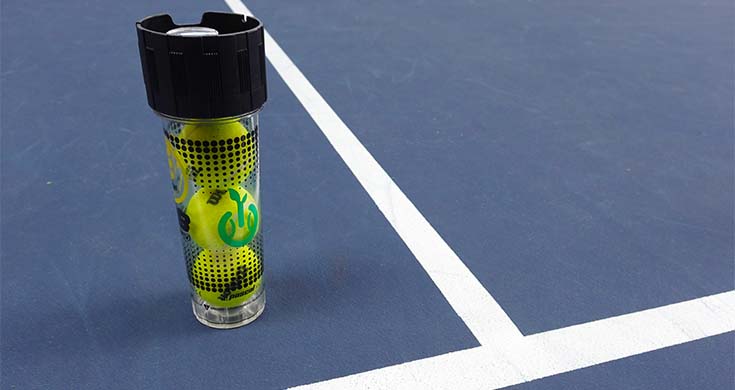
Use a ball pressurizer to avoid losing pressure after playing. They can even regain some pressure after being stored for a week.

Ball rotation

If you play with several balls, rotate them regularly to avoid excessive wear on a single ball.

Choice of surface

If possible, opt for softer surfaces like clay or grass, which are less harsh on the felt of the balls.

Comment prolonge rla durée de vie des balles

Conclusion

The lifespan of a tennis ball depends on many factors, including the intensity of play, the court surface, and the quality of the ball itself. For recreational use, a ball can last between 1 and 3 hours, while in competition for professional players, the balls are changed after 7 to 9 games. It is essential to monitor the condition of the balls to ensure a quality game and avoid injuries.

Discover our tennis balls