Outfit tip

Blisters on feet: how a good pair of tennis socks can change everything

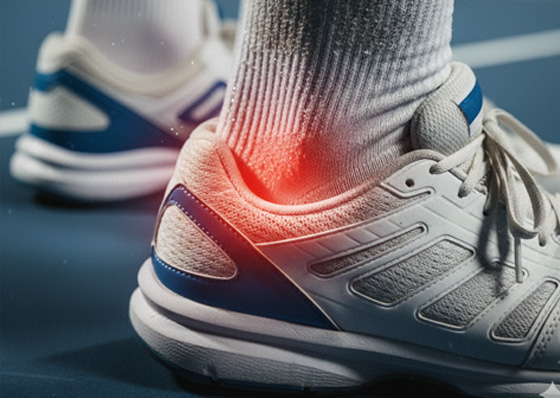
It's a pain that every tennis player knows. That insistent rubbing, that burning sensation that settles on the heel or under the arch of the foot, and which ends up ruining a match or a training session.

Foot blisters are the player's bane, a painful distraction that can turn the pleasure of playing into a real ordeal. Many think they are an inevitability, the price to pay for hours spent on the court.

The truth is, the solution often lies in a piece of your equipment that you've probably underestimated: your socks. This guide explains why blisters form and how a good pair of tennis socks can absolutely change everything.

Blisters on feet: how a good pair of tennis socks can change everything
Expert guide Pain tips

Why do blisters appear in tennis? The diabolical duo

The appearance of a blister is the result of a combination of two factors: friction and humidity. Tennis, with its sudden starts, sharp stops, slides, and constant changes of direction, is a sport that maximizes these two elements.

  • Friction: every support, every run, every jump causes a micro-movement of your foot inside the shoe. Repeated hundreds of times per match, this incessant friction irritates the skin.
  • Humidity: perspiration is the accelerator of the process. A wet foot softens the upper layer of the epidermis, making it much more fragile and vulnerable to the aggressions of friction.

This is where the choice of your socks becomes crucial. A classic cotton sock will absorb this moisture and keep it against your skin, creating the perfect environment for blister formation.

Prevention

The anatomy of an anti-blister tennis sock

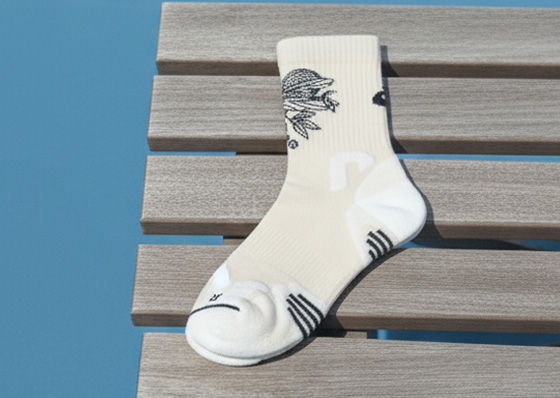
A technical tennis sock is not just a simple piece of fabric. It is protective equipment designed to actively combat the causes of blisters. Here are the features that make all the difference.

1. The Material: Humidity's Enemy

This is the most important criterion. Forget 100% cotton. A high-performance tennis sock is made from synthetic materials (polyester, polyamide, elastane) which have hydrophobic properties.

They do not retain moisture, but rather wick it away from the surface of your skin to the outside of the sock, where it can evaporate. Your feet thus remain drier, and your skin more resistant.

2. Strategic Reinforcements: The Anti-Friction Shield

Observe a good pair of tennis socks: you will notice thicker and more dense weaving zones. These reinforcements are not there by chance.

They are placed strategically on the most intense friction zones: the heel, the toes, and the Achilles tendon. This additional padding acts as a cushion that absorbs friction and protects your skin.

3. Support: A Sock That Stays Put

A sock that slips and creates folds inside the shoe is a direct cause of blisters.

Quality tennis socks incorporate an elastic compression band at the arch and ankle.

This support ensures that the sock stays perfectly in place, acting like a second skin and eliminating any risk of irritating folds.

Beyond Socks: Consider Your Complete Equipment

While socks are your best weapon, they are part of a global protection system. For optimal comfort, also ensure that your tennis shoes are well adapted to your foot and your playing surface.

Well-fitting shoes, combined with technical socks, form the winning duo for the protection of your feet.

Ready to take action?

Discover our selection of products tailored to your needs.

View outfits