Shoe advice

How to choose your tennis shoes?

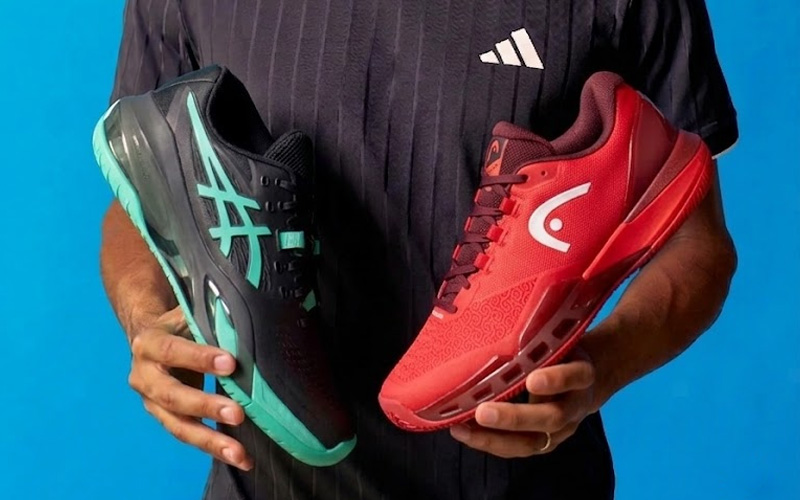
Even before talking about models or brands, let's lay the groundwork: a tennis shoe is not a running shoe, nor a city sneaker. Tennis is a "stop-and-go" sport with multidirectional movements. Your shoes are subjected to extreme stresses: sudden stops, slides, lateral support changes... A running shoe, designed to go straight, has no lateral reinforcement. Playing with them is almost a certainty of lacking performance and, worse, exposing yourself to an ankle sprain. A real tennis shoe is your first insurance on the court.

How to choose your tennis shoes?
Expert guide Choice tips

The N°1 criterion: Your player DNA

Forget about color or brand for now. The first question to ask yourself is: "What kind of player am I?". Your playing style dictates the technology you need. Once your profile is identified, you can use our "Main Benefit" filter on our category page.

Equipment

The science under your feet: Understanding the great tennis compromise

When it comes to shoes, it's all about compromise. The manufacturer must balance 3 poles: Stability, Responsiveness, and Comfort. It's impossible to have 10/10 everywhere. By understanding this, you will make an informed choice.

Stability

It's the shoe's ability to resist twisting and support the foot. It is ensured by reinforcements (DYNAWALL™ at Asics), chassis (4D Support Chassis at Wilson) or specific lacing systems (Barricade at Adidas). More stability = often more weight and less flexibility.

Responsiveness (Speed)

It's the feeling of lightness and energy return. It is achieved through reactive foams (FuelCell at New Balance, FlyteFoam™ at Asics) and a lightweight construction. More responsiveness = often less durability and maximum stability.

Comfort & Cushioning

It's the ability to absorb shocks. Crucial for hard surfaces and sensitive joints. Technologies like GEL™ (Asics) or Power Cushion+ (Yonex) excel in this area. Maximum cushioning = sometimes a little less court feel.

The playing field: adapting your sole is non-negotiable

It's a fundamental safety point. Each surface has its sole.

  • Clay court: Requires a deep herringbone sole ("Clay"). It allows for dirt evacuation, gripping for starts, and controlled sliding. Using another sole is dangerous.
  • Hard court: Requires an "All Court" sole. It is made of ultra-resistant rubber (AHARPLUS™, Duralast, Michelin) to prevent wear in just a few hours. Its cushioning is also reinforced.

Final word: tips for buying and maintenance

You now have all the technical keys. Here are some final practical tips:

  • The right size: Always allow half a size larger than your street shoe. The foot swells and moves, this space is vital.
  • The importance of socks: Always try on your shoes with your tennis socks, which are thicker.
  • Maintenance: Never put your shoes in the washing machine! Brush them and let them air dry.
  • Rotation: If you play more than twice a week, alternate with two pairs to allow the cushioning foam to regenerate.

You are now an expert. All that's left is to find the pair that will accompany you to victory.

Ready to take action?

Discover our selection of tennis shoes adapted to your needs.

View the selection