-10% with code FALL10
-30%
 39
40
40,5
41,5
42
42,5
43,5
44
44,5
45
+3
39
40
40,5
41,5
42
42,5
43,5
44
44,5
45
+3
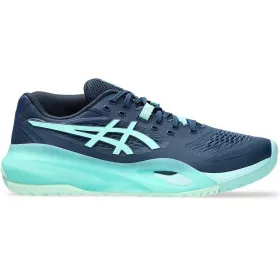
Asics Gel Resolution X Tennis Shoes - Navy / Turquoise
39
40
40,5
41,5
42
42,5
43,5
44
44,5
45
+3
€160.00
€111.10

Choosing an Asics tennis shoe means going with the Japanese brand that made stability and joint protection its signature. Founded in 1949, Asics takes its name from the Latin phrase Anima Sana In Corpore Sano, a sound mind in a sound body, and develops its models at its Institute of Sport Science in Japan, which the Court FF product sheets cite by name.
Four ranges, four ways of playing. The Gel Resolution is the only one rated at maximum lateral stability: 420 g in a 42.5, for the defender who lives behind the line. The Gel Court FF, worn by Novak Djokovic, is the only one of the four ranges with a versatile playing style: 394 g, to defend then step in inside the same point. The Solution Speed is the lightest at 329 g, with minimal responsive cushioning and a narrow fit, for the game that moves forward. The Gel Challenger carries the reinforced stability and balanced cushioning of the Court FF in a simpler construction, for the regular club player.
Technologies are spread across the ranges, not universal. Contrary to what you often read, not every Asics shoe carries every Asics technology: Dynawall belongs to the Gel Resolution, Twisstruss and the Mono-Sock bootie to the Court FF, Speedtruss to the Solution Speed. The table further down shows, for each technology, the range where it is actually found.
Browse our full Asics selection below, for men, women and children, available with all-surface and clay outsoles. Back to all our tennis shoes.
39
40
40,5
41,5
42
42,5
43,5
44
44,5
45
+3
 40
41,5
42
42,5
43,5
44
44,5
45
46
40
41,5
42
42,5
43,5
44
44,5
45
46
 42
42,5
43,5
44
44,5
45
42
42,5
43,5
44
44,5
45
 39
40,5
41,5
42
42,5
43,5
44,5
45
48
39
40,5
41,5
42
42,5
43,5
44,5
45
48
 42
43,5
44
46
47
42
43,5
44
46
47
 40,5
42
43,5
44
44,5
45
40,5
42
43,5
44
44,5
45
 41,5
42
42,5
43,5
44
44,5
45
46
47
41,5
42
42,5
43,5
44
44,5
45
46
47
 39
40
40,5
41,5
42
42,5
43,5
44
44,5
45
+3
39
40
40,5
41,5
42
42,5
43,5
44
44,5
45
+3
 41,5
42
42,5
44
45
41,5
42
42,5
44
45
 40
40,5
41,5
42
42,5
43,5
44
44,5
45
46
+2
40
40,5
41,5
42
42,5
43,5
44
44,5
45
46
+2
 40
40,5
41,5
42
42,5
43,5
44
44,5
45
46
40
40,5
41,5
42
42,5
43,5
44
44,5
45
46
 39
41,5
42
42,5
43,5
44
44,5
45
46
39
41,5
42
42,5
43,5
44
44,5
45
46
 38
39
40
40,5
41,5
42
38
39
40
40,5
41,5
42
 40,5
41,5
42,5
43,5
44
44,5
45
40,5
41,5
42,5
43,5
44
44,5
45
 37,5
38
39
40
40,5
41,5
42
37,5
38
39
40
40,5
41,5
42
 37,5
38
39
39,5
40
40,5
42
37,5
38
39
39,5
40
40,5
42
 37,5
38
39
40
40,5
41,5
42
37,5
38
39
40
40,5
41,5
42
 41,5
42
42,5
43,5
44
44,5
45
46
47
41,5
42
42,5
43,5
44
44,5
45
46
47
 38
39
39,5
41,5
38
39
39,5
41,5
 40,5
41,5
42
42,5
45
46
40,5
41,5
42
42,5
45
46
 37
37,5
38
40,5
37
37,5
38
40,5
 41,5
42
42,5
43,5
44
44,5
45
46
41,5
42
42,5
43,5
44
44,5
45
46
 37,5
38
39
39,5
40
40,5
41,5
42
37,5
38
39
39,5
40
40,5
41,5
42
 33
35
36
37
38
39
33
35
36
37
38
39

 35
36
35
36
 44
44,5
44
44,5
 40,5
44
40,5
44
 44
45
47
44
45
47
 45
45
 42
43,5
44
42
43,5
44
 37
37,5
37
37,5
 37
39
40
41,5
37
39
40
41,5
 39
40,5
41,5
42
39
40,5
41,5
42
 37,5
37,5
 40,5
40,5
 37
40,5
42
37
40,5
42
The four ranges are not four levels of quality, they are four styles of play. The figures below come from the product sheets, taken in size 42.5 (US 9).
Maximum lateral stability, the only one of the four rated that way, for 420 g. This is the shoe of the player who defends, slides and often lands far from their axis. It is also the only one of the four ranges offered in a junior version, alongside the separate Gel Game line described below. See the Gel Resolution.
The only versatile playing style of the four, with reinforced lateral stability and 394 g. Worn by Novak Djokovic, it suits the player who defends then steps in inside the same point. See the Gel Court FF.
The lightest at 329 g, with minimal responsive cushioning and a narrow fit. It favours quick recovery of the foot, at the cost of lateral stability, which drops back to standard. See the Solution Speed.
It shares the reinforced lateral stability, balanced cushioning and standard fit of the Court FF, for 390 g, which is 4 g less. What separates it from the competition models is the upper construction and the choice of materials. See the Gel Challenger.
Two models in the department belong to none of these four ranges: the Gel Game line, simpler, which Asics offers in a women's version and a junior version. You will come across them in the selection below.
The four ranges side by side, on the criteria recorded in the product sheets. Columns run from heaviest to lightest.
| Criterion | Gel Resolution | Gel Court FF | Gel Challenger | Solution Speed |
|---|---|---|---|---|
| Weight in 42.5 (US 9) | 420 g | 394 g | 390 g | 329 g |
| Weight in 39.5 (US 8) | 354 g | not offered | 320 g | 329 g |
| Lateral stability | Maximum | Reinforced | Reinforced | Standard |
| Cushioning | Balanced | Balanced | Balanced | Minimal, responsive |
| Fit | Standard | Standard | Standard | Narrow |
| Playing style | Defender | Versatile | Defender | Forward |
Asics technology names get thrown around as if every shoe carried them all. They do not. Here is, technology by technology, the range where it is actually found according to the product sheets.
| Technology | What it does | Where you find it |
|---|---|---|
| GEL | Absorbs the landing | All four ranges |
| Dynawall | Stops the foot tipping outwards | Gel Resolution, adult models |
| FF Blast+ | Foam cushioning at the heel | Gel Resolution |
| Dynalacing | Lacing system for a precise lockdown | Gel Resolution and Gel Challenger |
| Twisstruss | Limits torsion of the shoe | Gel Court FF |
| Mono-Sock | One-piece bootie, no tongue | Gel Court FF |
| Speedtruss | Returns energy on push-off | Solution Speed |
| Precision-Sole | Zoned outsole | Solution Speed |
| FlyteFoam | Light midsole foam | Solution Speed and Gel Court FF |
| Aharplus | Abrasion-resistant rubber | All four ranges, depending on the model |
| PGuard | Toe protector | Gel Challenger, Gel Court FF, Gel Resolution |
| Ortholite | Insole | Gel Challenger, several models |
Two practical lessons. First, a technology name tells you nothing until you know which range carries it. Second, GEL and Aharplus are the only common denominators: everything else is a choice of range, which means a choice of playing style.
Every range comes with two outsoles, and that is the first choice to make, before the range itself. An all-surface outsole, marked AC, has reinforced zones where you brake on a hard court. A clay outsole has a deep herringbone pattern whose job is to clear the granules instead of holding them.
The classic mistake is playing on clay with an all-surface outsole. It clogs, stops releasing the surface, and the slide turns unpredictable at the exact moment you were counting on it to stop you. The reverse is less dangerous but expensive: a clay outsole wears fast on hard courts. Our guide on choosing shoes for your court type goes through it surface by surface. Of the four ranges, the Gel Resolution offers the widest choice of clay models.
There is no universal answer, and that is good news: the four ranges target different games, not different quality levels. If you defend, take the Gel Resolution. If you attack, the Solution Speed. If you do both inside the same point, the Gel Court FF. If you play club tennis regularly without chasing extreme feel, the Gel Challenger.
Yes, take your usual size. One nuance: the sheets record a narrow fit for the Solution Speed, where the other three ranges are standard. If your feet are wide, avoid the speed-focused range or go half a size up and check the heel does not slip.
No. A running shoe is built for forward motion and has neither lateral reinforcement nor an outsole made for sideways steps. In tennis most of the load is lateral, which is exactly what Dynawall, Twisstruss and reinforced uppers are there to secure. Playing in running shoes trades an ankle for the price of a pair.
It depends above all on your surface, your volume of play and how much you drag the back foot on serve. What can be compared is the parts that resist: the Aharplus outsole and the PGuard toe protector.
A beginner has unsettled footwork, so stability matters more than lightness. The Gel Challenger and the Gel Resolution both answer that, the second one notch above. Our guide on how to choose tennis shoes covers the rest.


