-10% with code FALL10

Ball advice
How much does a tennis ball weigh?
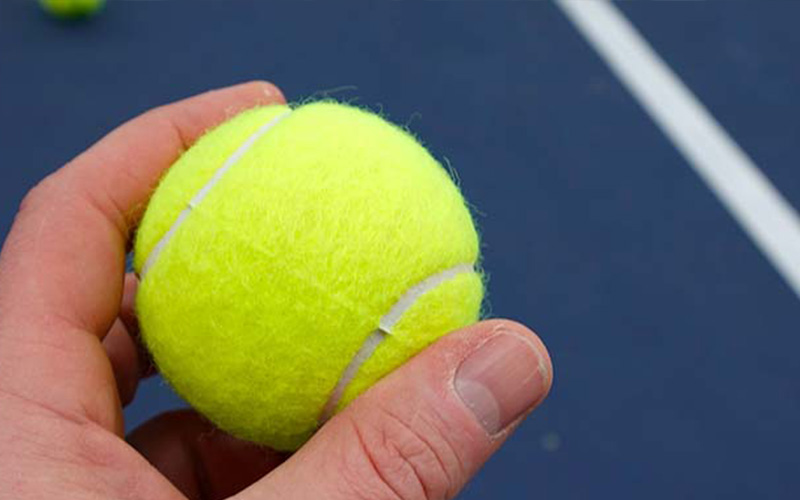
The tennis ball is an essential element of this sport, and although its size and bounce are often discussed aspects, its weight also plays a crucial role in players' performance. But then, how much exactly does a tennis ball weigh? Let's look at this in detail.
Expert guide
Culture
The Regulatory Weight of a Tennis Ball
International Tennis Federation (ITF) Standards
According to the official regulations of the International Tennis Federation (ITF), the weight of a tennis ball must be between 56.0 and 59.4 grams. This weight range ensures that the ball offers an optimal balance between speed, control, and bounce, whether on hard courts, clay, or grass.
This weight may seem insignificant, but it has a considerable impact on the ball's speed and how it reacts to players' shots.
Why is this weight important?
The weight of a tennis ball directly influences several aspects of the game:
- Speed: A lighter ball travels faster through the air, while a heavier ball is slightly slower but more stable.
- Control: A heavier weight allows for better control and makes spins more pronounced, which can be an advantage for attackers and top-spin players.
- Bounce: The ball's weight also affects its bounce, with a heavier ball bouncing less high than a lighter one.
Weight variations depending on the manufacturer
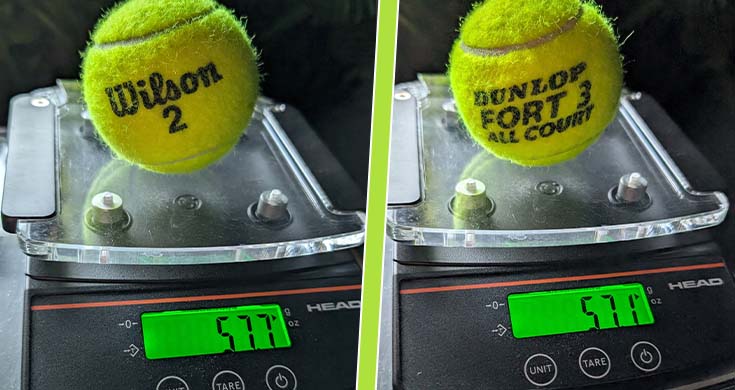
Although all approved tennis balls comply with ITF standards, there are slight weight variations depending on brands and models. Some brands may favor slightly lighter balls for fast surfaces, while others prefer heavier balls for better control on slow courts, such as clay.
Tennis balls for different types of play
- For hard surfaces: Balls designed for hard surfaces are generally more robust and can be slightly heavier to withstand wear and tear.
- For clay surfaces: On clay, players often look for balls that favor control. These can have a slightly lighter weight to compensate for the slowness of the court.
How weight influences player performance?
Professional players are very sensitive to the weight of the balls they use. A ball that is too light or too heavy can affect their ability to hit precise shots. For example, during long rallies, a heavier ball is often preferred for powerful and more controlled shots, while a lighter ball can be useful for fast serves.
The impact of weather conditions
It is also important to note that external conditions, such as humidity or temperature, can affect the apparent weight of a ball. In humid weather, for example, a ball can absorb some moisture, thus slightly increasing its weight, which influences its performance.
Conclusion
In summary, a tennis ball weighs between 56.0 and 59.4 grams, according to ITF standards. This weight is carefully studied to offer a perfect balance between speed, control, and bounce. Whether you are an amateur player or a professional, the weight of the ball plays a crucial role in your game.
Ready to take action?
Discover our selection of tennis balls adapted to your needs.
See tennis balls