-12% with code SOLDES12
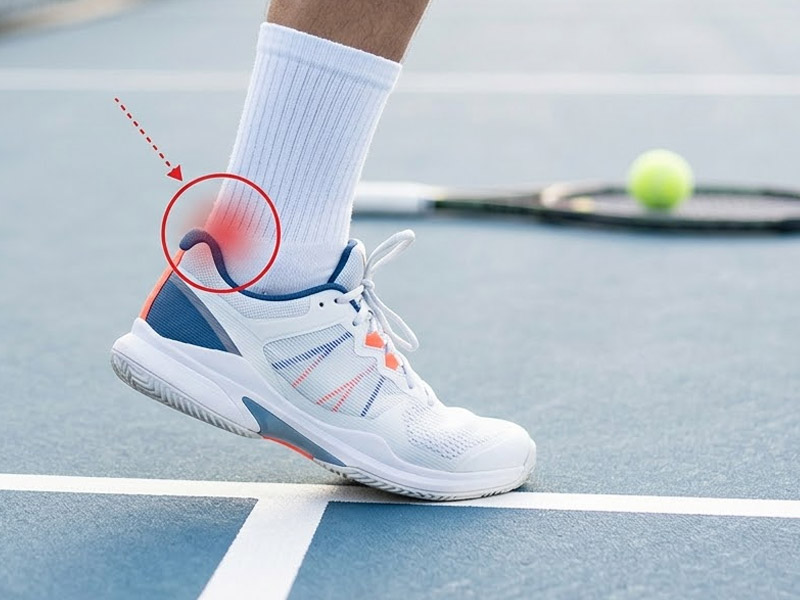
Achilles tendonitis is a common injury among tennis players, mainly due to sudden movements, quick changes of direction, and frequent jumps on the court. If you suffer from this condition, it’s crucial to choose the right shoes to relieve pressure on the tendon and prevent it from worsening. In this article, we help you find the best tennis shoes suitable for players dealing with Achilles tendonitis.
Specific Requirements for Tennis Shoes When You Have Achilles Tendonitis
1. Enhanced Cushioning
One of the main factors to consider is cushioning. When dealing with Achilles tendonitis, it’s essential to absorb as much shock as possible to avoid putting excessive strain on the tendon. Look for shoes that offer generous cushioning, especially in the heel area.
- Heel cushioning: Prioritize shoe models with good heel cushioning to reduce impact with every step or jump.
- Specific technologies: Some brands use advanced cushioning technologies, such as gel or memory foam, to provide optimal shock absorption.
2. Good Heel and Ankle Support
Heel and ankle support is crucial to avoid putting extra pressure on the Achilles tendon. A shoe that firmly holds the back of the foot helps reduce the risk of abnormal movements that can worsen the pain.
- Heel reinforcement: Choose shoes with reinforced heel support to ensure better stability and increased hold.
- Lateral support: Also make sure the shoe provides good lateral support to stabilize your foot during quick side-to-side movements.
3. A Midsole with a High Drop
The drop refers to the height difference between the heel and the forefoot in a shoe. A higher drop (generally between 8 mm and 12 mm) helps relieve pressure on the Achilles tendon by slightly tilting the foot forward. This reduces tension on the tendon and can greatly ease the pain.
- Recommended drop: Look for shoes with a drop of at least 8 mm, ideally 10–12 mm, to help reduce tension on your tendon.
4. A Comfortable and Personalized Fit
It’s essential that your tennis shoes fit well to avoid any unnecessary rubbing or pressure. A poor fit can worsen Achilles tendonitis.
- Appropriate width: If you have wide or narrow feet, choose models available in different widths to ensure optimal comfort.
- Orthotic insoles: If needed, consider adding orthotic insoles to further personalize support and cushioning.
The Best Tennis Shoes for Achilles Tendonitis
1. Asics Gel Resolution
The Asics Gel Resolution range is one of the best options for players suffering from Achilles tendonitis. It features Asics’ famous Gel technology that provides excellent cushioning under the heel, ideal for reducing impact. Its heel and ankle support system also ensures optimal stability.
- Advantages: Excellent shock absorption, reinforced heel support, optimal lateral support.
- Highlight: Ideal for players seeking long-lasting comfort and support.
2. Asics Gel Solution Speed
The Asics Gel Solution Speed range is a lightweight shoe offering a good balance between cushioning and responsiveness. Its higher drop helps reduce the strain on the Achilles tendon, while the midsole design with a slightly elevated drop lowers pressure on the tendon.
- Advantages: Lightweight, effective cushioning, good heel support.
- Highlight: Recommended for fast players looking for a responsive shoe with solid cushioning.
3. New Balance Fresh Foam Lav
New Balance is known for providing shoes tailored to specific needs, and the Fresh Foam Lav is ideal for those suffering from Achilles tendonitis. With generous heel cushioning and a high drop, it’s perfect for players who require extra comfort and support.
- Advantages: Wide range of sizes, maximum cushioning, high drop to relieve the Achilles tendon.
How to Prevent Achilles Tendon Pain with the Right Shoes
Warm-Up and Stretching
While shoes can help reduce the symptoms of Achilles tendonitis, it’s also essential to include stretching and warm-up exercises before and after each tennis session. This helps relax the tendon and prevents the pain from worsening.
Regularly Replace Your Shoes
When your tennis shoes start to wear out, they lose their ability to properly absorb shocks. It’s important to replace your shoes regularly, especially if you suffer from Achilles tendon pain. Experts recommend changing your shoes after about 6 months of regular use.
Conclusion
Choosing the right pair of tennis shoes is crucial for players suffering from Achilles tendonitis. Prioritize shoes with enhanced cushioning, good heel and ankle support, and a higher drop to reduce tension on the tendon.